
Keeping a warehouse clean is an important part of daily operations. A clean space helps people move safely, supports a steady workflow, and protects floors and equipment from damage. When dirt, dust, or clutter build up, work slows down, and safety risks increase.
Because warehouses stay active throughout the day, cleaning needs to be planned and consistent. The right approach makes cleaning manageable instead of overwhelming. This guide shares clear and practical warehouse cleaning tips that help maintain a clean, safe, and organised warehouse without disrupting regular work.
Why Daily Warehouse Cleaning Actually Matters
Think about how much activity happens in your warehouse. Workers are there from opening to closing. Forklifts cross the floor dozens of times each day. Products get moved, stored, packed, and shipped constantly. All this movement means dirt and waste pile up faster than you’d think.
If you fall behind on cleaning, several problems start to show up. Floors get slippery from spills. Safety lines wear away and become hard to see. Boxes and pallets end up blocking paths. All of this slows down your team and raises the chance that someone gets hurt. Regular cleaning stops small problems before they turn into big ones.
Here’s what a clean warehouse does for you:
- Cuts down on slip and trip accidents
- Keeps paths open and clear
- Helps work flow smoothly every day
- Makes your floors last longer
How to Set Up a Cleaning Routine That Works
Every warehouse needs a clear plan. Without one, cleaning becomes random and gets skipped too often. A straightforward schedule makes everything easier to handle.
What to clean every day:
- Sweep the main paths and entry points
- Wipe up spills right when they happen
- Take out trash and clear loose debris
- Make sure loading areas stay clean
What to clean each week:
- Sweep and scrub the busiest floor sections
- Get into corners and along edges
- Look at floor markings and safety lines to see if they need touch-ups
What to clean every month:
- Do a thorough cleaning of large floor spaces
- Check floors for cracks or wear
- Change your cleaning plan if certain areas need more attention
Following this routine prevents dirt from piling up and keeps things manageable.
Choosing Equipment That Actually Gets the Job Done
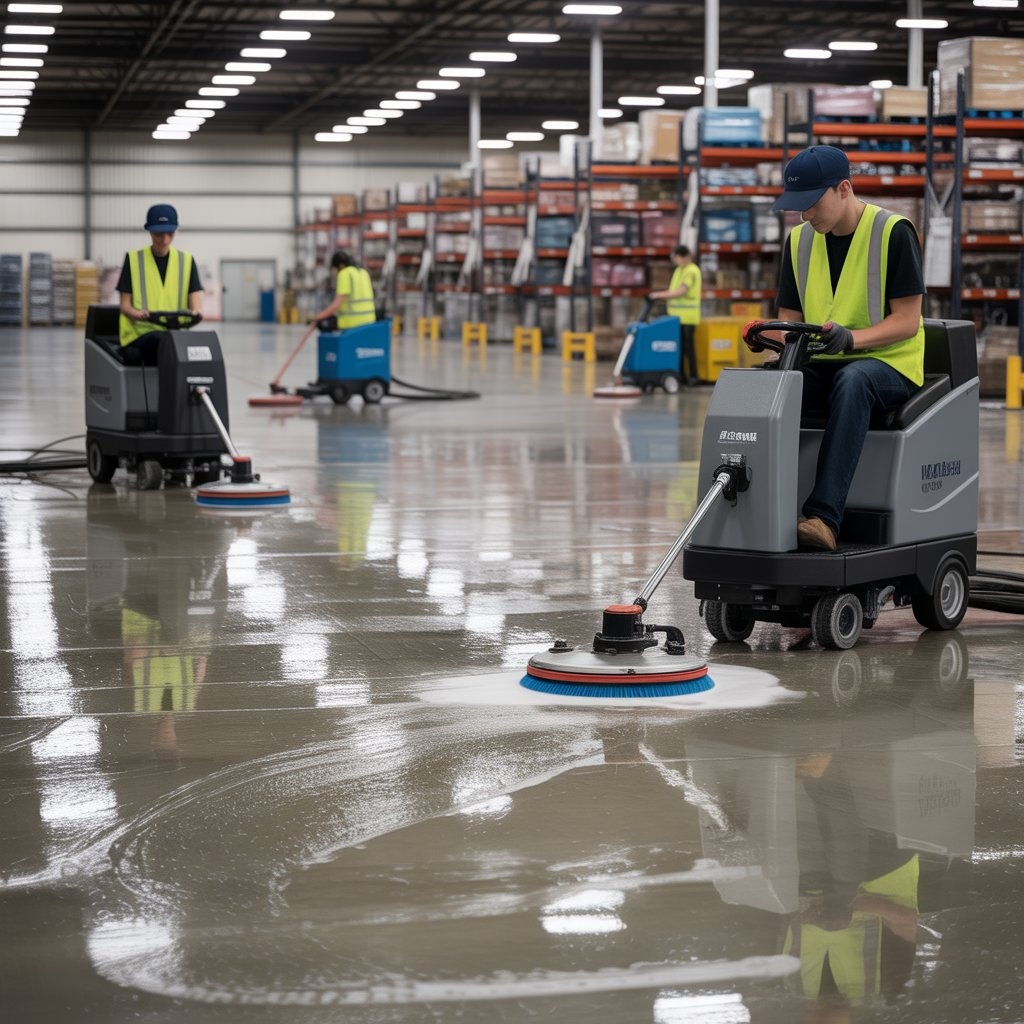
The right tools make a huge difference. You can’t clean a big warehouse floor with just a mop and broom. Industrial machines save hours of work and do a better job.
Here’s what most warehouses use:
- Industrial sweepers that pick up dust and loose materials
- Walk-behind or ride-on scrubbers for deeper floor cleaning
- Pressure washers for loading docks and outside areas
- Industrial vacuums for fine dust particles
Companies like All Zones Sweeping & Scrubbing use machines built for large spaces. This means they can finish the work quickly without getting in the way of your operations.
Taking Care of Your Warehouse Floors
Your floors take a beating every single day. Heavy loads, constant foot traffic, and moving equipment all wear them down. On top of that, dirt and small rocks act like sandpaper on the surface. This is why warehouse floor maintenance can’t be ignored.
Good floor care means:
- Sweeping regularly to get rid of grit
- Scrubbing to lift oil spots and stains
- Cleaning up spills immediately
- Watching for early warning signs of damage
When you take care of your floors properly, they stay safer to walk on and last much longer before needing major repairs.
Making Cleaning Part of Your Daily Operations
Cleaning should fit into your workday, not interrupt it. The best approach is to make it support what you’re already doing instead of stopping everything.
For instance, you can schedule cleaning during shift changes when fewer people are around. Or you can assign team members to tidy their own areas throughout the day. Over time, this builds good habits that become automatic.
Paying Extra Attention to High-Traffic Spots
Some parts of your warehouse get dirty much faster than others. These spots need cleaning more often if you want to stay ahead of problems.
Watch these areas closely:
- Loading docks
- Forklift pathways
- Doors and entry points
- Storage sections with loose materials
Cleaning these zones more frequently reduces accidents and keeps everything moving efficiently.
Getting Your Team Involved
Even when you hire professional cleaners, your staff still plays a big role. Everyone needs to understand their part in keeping the warehouse clean.
Your training should cover:
- How to keep walkways clear at all times
- When and how to report spills or hazards
- Safe ways to use cleaning equipment
- Basic housekeeping expectations
When everyone follows the same standards, it stays consistent across all shifts.
Why Bringing in Professional Help Makes Sense
Your in-house team can manage routine cleaning. However, when it comes to deeper, more intensive work, industrial cleaning requires specialized equipment and expertise. Professional cleaning services help prevent dirt buildup, tackle stubborn grime, and keep floors in good condition for the long term.
Final Thoughts
Keeping yor warehouse clean isn’t complicated, but it does require consistency. When you follow a regular routine, use the right equipment, and focus on warehouse floor maintenance, you create a safer workspace that runs more efficiently. These warehouse cleaning tips work because they’re practical and repeatable.
For businesses that need reliable, ongoing support, All Zones Sweeping & Scrubbing provides the professional cleaning services that keep warehouses safe, organized, and ready for whatever each day brings.
Common Questions About Warehouse Cleaning
How often does a warehouse really need to be cleaned?
Most warehouses should sweep high-traffic areas every day, do weekly scrubbing in busy sections, and schedule monthly deep cleaning sessions. Your exact needs will depend on how much activity you have and what kind of materials you handle. Warehouses with heavier traffic or messier products might need more frequent attention.
Why does floor cleaning matter so much?
Dirty floors are dangerous floors. Spills make surfaces slippery. Debris hides tripping hazards. When floors are clean, workers can see what’s around them clearly, which prevents injuries. Clean floors also make daily tasks easier because equipment moves smoothly and workers can focus on their jobs instead of watching their step.
Is it possible to clean during regular work hours?
Yes, absolutely. The key is planning around your schedule. Most warehouses find times when activity slows down, maybe during breaks, shift changes, or specific hours of the day. Professional cleaning teams know how to work efficiently without blocking your operations or creating safety hazards for your staff.
What’s the real difference between sweeping and scrubbing?
Sweeping picks up loose stuff sitting on top of the floor, like dirt, dust, cardboard pieces, and other debris. Scrubbing goes deeper. It uses water, cleaning solution, and rotating brushes to lift stuck-on grime, oil stains, and ground-in dirt. Both are important, but they do different jobs. You need sweeping to happen more often, while scrubbing can be less frequent but still regular.
Does keeping things clean actually help with safety inspections?
Yes, it helps a lot. When your warehouse is clean and organized, inspectors can easily see that you’re following safety protocols. Clean floors make it obvious where safety lines are marked. Clear walkways show you’re serious about preventing accidents.
Plus, regular cleaning means you spot potential problems early, things like floor damage, blocked exits, or worn safety markings, so you can fix them before an inspection happens.